Starting and maintaining a worm farm
Put your 3-tier worm farm in the shade, add 10 cm / 4 in of soaked, shredded newspaper to the middle bin, add the worms, feed a little at a time under a wet newspaper and plastic sheet, keep it as moist as a squeezed-out sponge, and harvest once the worms have moved up.
Starting a worm farm to convert organic waste into nutrient-rich plant food and soil conditioner is easy! This page gives you step-by-step instructions for setting up and maintaining a 3-tier worm bin. Don’t have one yet? See how to build a homemade 3-tier worm compost bin.
How to set up a 3-tier worm farm, step by step
1Find a shady spot
Find a place out of direct sunlight for your worm bin to prevent overheating.
2Add moist bedding to the middle bin
Place a layer of approximately 10 cm / 4 inches of moist bedding in the bottom of your middle bin. Shredded newspaper or cardboard makes an excellent bedding.
Soak the bedding in water for at least one hour, then drain it before you add it to the worm farm.
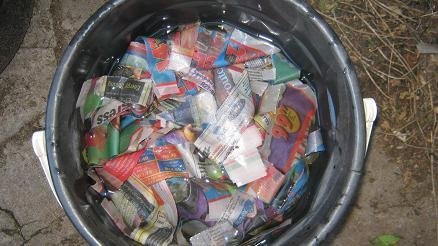
Soaked newspapers make fine bedding 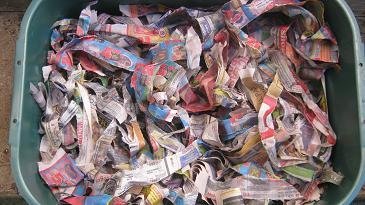
Wet newspaper strips in the bin 3Add the worms
Place the worms with some soil or compost on top of the shredded paper. Your worms will burrow down into the bedding.
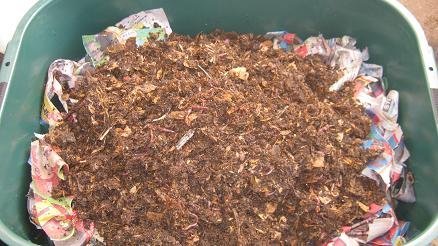
Worms and compost on top of the bedding 4Start feeding, a little at first
Start adding worm food in small quantities and increase feeding with time.
Place the food on top of the bedding and cover it with a whole soaked newspaper and a plastic sheet. This acts as a barrier against pests and keeps the moisture more stable.
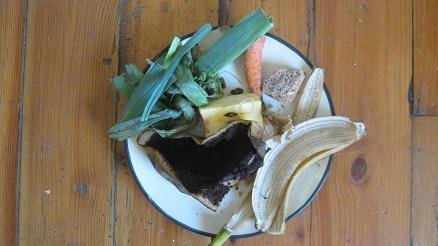
Kitchen scraps make good worm food 5Keep it moist
The contents should always be moist, ideally as moist as a squeezed-out sponge. A little more or less is still fine. Worms breathe through their skin and need a moist environment.
If the bedding gets dry, pour some water (a few litres / half a gallon) over it, but avoid fresh chlorinated tap water if possible. Let it stand in an open bucket for 24 hours to reduce the chlorine.
6Keep adding food on top
Regularly lift the plastic sheet and newspaper and add fresh food on the surface. Compost worms are top feeders and always migrate upwards to follow the food.
Once the middle bin is full, start adding food to the bin on top of it. Over time most worms move up into the top bin.
7Collect the liquid
Regularly add some water. The excess liquid absorbs nutrients from the finished castings and drains into the bottom bin (ideally with a tap). Use it as is, or brew fresh worm tea with it.
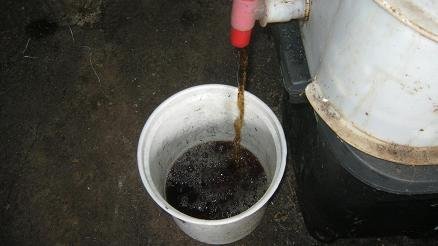
Liquidized worm castings flowing into a bucket 8Harvest the worm castings
When the top bin is about half full of castings and food, most worms should be in the top bin. Empty the castings from the middle bin and place the empty bin on top of the half-full one.
One advantage of a 3-tier bin: you don’t have to separate worms from castings by hand. More on harvesting castings from stacking bins.
Temperature: compost worms of the variety Eisenia fetida handle a wide range of temperatures, from about 5 °C / 41 °F to 28 °C / 82 °F, quite comfortably.
Want to track feedings, moisture and harvests over your first months? That is what the Easy Worm Farming Planner is for.