

Worm bins: which type of bin suits you?
Compost worms are not fussy. Almost any container of wood, plastic, metal or brick works, as long as it gives them drainage, air, shade, moisture and protection from predators. The type you choose depends on your space, how much waste you have and how much work you want at harvest time.
Over nearly 30 years of worm farming, first in South Africa and then in Germany, I have kept worms in buckets, bathtubs, bags, brick beds and stacking bins. This page compares the main types of worm bin so you can pick one. If you already know what you want to build, go straight to the build guides linked at the bottom.
What does every worm bin need?
- Drainage: holes of 6–8 mm (about ¼–⅓ inch) in the bottom, so the worms cannot drown.
- Air: a few ventilation holes near the top.
- Shade and a steady temperature: Compost worms cope with about 5–29 °C (41–84.2 °F), and they do best at 15–25 °C (59–77 °F). Under a tree, in a store room, garage or cellar are good spots.
- Moisture: like a squeezed-out sponge.
- Bedding and food, and a cover against predators.
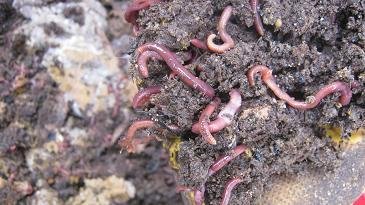
Which types of worm bin are there?
- Single bin or bucket: the simplest and cheapest. You harvest by hand. See my budget worm farm.
- Two-bin with a tap: a working bin sits inside a collecting bin that catches the liquid. See the DIY worm composting bin.
- Stacking (multi-tier) bin: the worms move up into fresh food, so harvesting is easier. See the homemade 3-tier bin.
- Flow-through bin: food goes in on top, castings come out at the bottom. For bigger volumes. See the DIY flow-through bin.
- Bulk beds: brick, block or wooden beds on the ground, for large amounts of waste or a business.
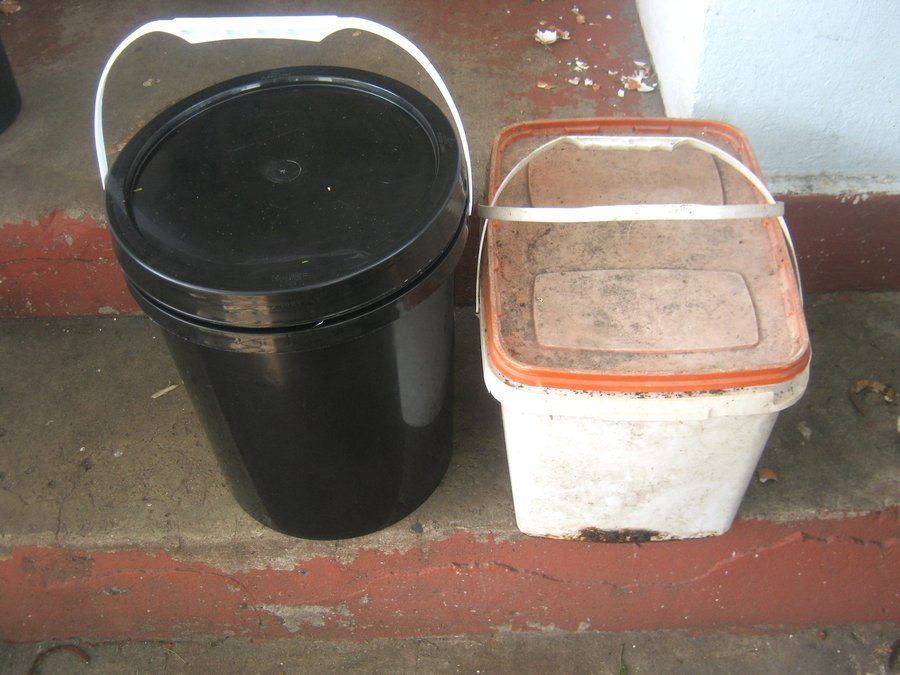
How big should my worm bin be?
Start with at least 10 litres (about 2.6 US gallons) and room for about 1,000 worms. The bin I used most is about 49 × 35 × 20 cm and holds about 1,500 worms but is still easy for one person to lift. Surface area matters more than depth, because the worms feed near the top. Bigger bins get heavy, so for more waste use two bins rather than one huge one.
Indoor or outdoor bin?
Indoors you need a closed bin with a tap and a lid that keeps flies out. That is covered on indoor worm farm. Outdoors, shade is the most important thing, because a bin in full sun can get hot enough to kill the worms.
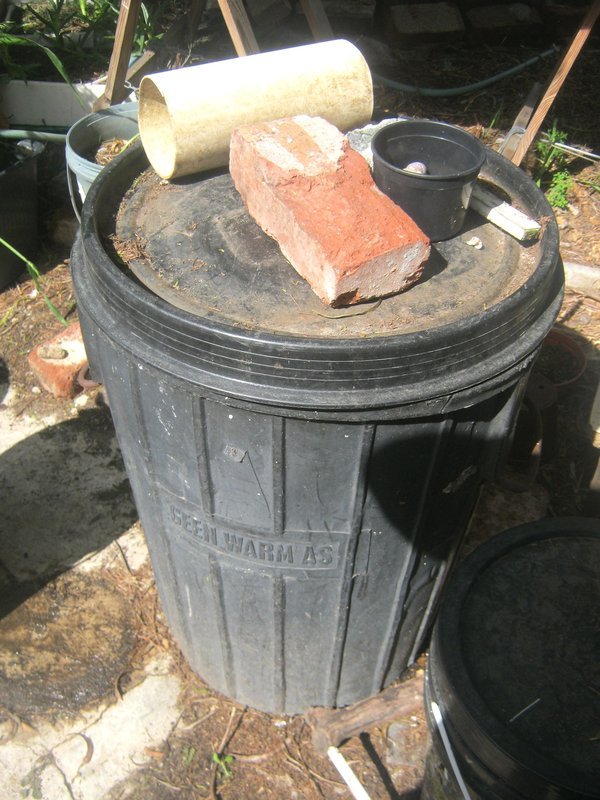
Where do I get a bin for free?
Look around the house first, then ask family and friends. Old buckets, storage boxes, bathtubs and drums all work. Plastic recyclers and scrap yards often have containers too. Only use containers that never held chemicals or oil.
Running your worm farm as a business? How to Start a Profitable Worm Business on a Shoestring Budget shows you the way.
Happy worming!
Stephan Kloppert
Nearly 30 years of worm farming in South Africa and Germany