

Worms escaping into the bottom bin?
A few worms in the bottom tray are normal. Stop them drowning by leaving the tap open over a bucket and putting a brick in the tray as a safe island, and line the worm tray floor with newspaper or fine shade cloth. If worms go down in big numbers, check for bedding that is too wet, too acidic, overfed or too hot, or for black soldier fly larvae.
I have two worm farms running, one I bought and one home-made. The bought one has been running for about a year and the second one for about 4 months.
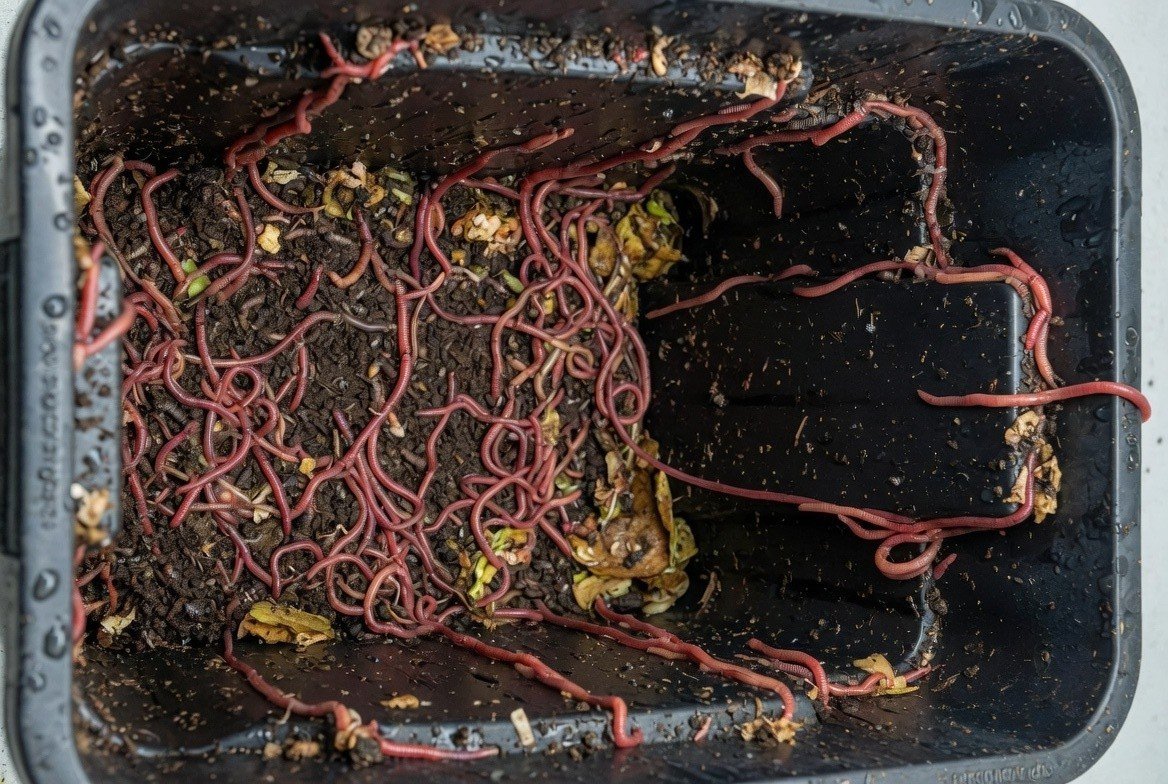
In the past 2 months I’ve noticed that the worms in both farms tend to escape into the bottom bins and end up in the worm tea. Some of them drowned, but I now check daily and most days I rescue worms from the bottom bin.
It started with the new bin first and I thought I had made too many holes in the bottom. I’m thinking of placing a piece of mesh (shade cloth) on the bottom so the liquid can still drain but the worms can’t escape.
The bins get some afternoon sun. Could they be heating up too much? I cover the surface with cardboard or newspaper, which I keep moist by spraying it with water every morning.
Why is this happening? Are my bins overcrowded or am I doing something wrong?
Hello Wynand,
Compost worms usually feed near the top of the bin, but they move around nearly all the time, so it’s not unusual for a few to end up in the bottom tray meant for the worm tea. Worms breathe through their skin and can survive quite a while in liquid as long as it contains enough oxygen.
To stop them drowning, drain the liquid as soon as possible so only a little stays in the bottom tray. An easy way is to put a bucket under the tap and leave the tap open. You can also put a few stones or a brick in the bottom tray as a “safe island”.
To reduce the number of worms crawling down, cover the floor of the worm tray with one or two sheets of newspaper. Liquid still drains through, but it acts as a barrier. Shade cloth does the same job if the mesh is fine enough – worms can squeeze through tiny openings.
Morning or afternoon sun shouldn’t be a problem as long as there’s enough bedding for the worms to shelter in. Moist cardboard or newspaper on top is a good cover: it keeps pests out, keeps the food moist and lets the worms, which dislike light, come right up to feed.
A few worms in the bottom is nothing to worry about. If they go down in big numbers, something may be wrong inside the bin, for example black soldier fly maggots.
The full answer
Over nearly 30 years of worm farming, first in South Africa and then in Germany, I’ve learned that worms vote with their bodies. A few in the bottom tray is normal. Many is a message. This is what to check and what to do.
Is it normal to find worms in the bottom tray?
A few, yes. Worms wander, and some always slip through the drainage holes, especially in a new bin or when the bedding is still thin. A handful every week is normal. Dozens every day means the worms are trying to get away from something.
How do I stop worms falling into the worm tea?
- Line the floor of the lowest worm tray with one or two sheets of newspaper or a piece of fine shade cloth. Liquid drains, worms stay put. The paper gets eaten over time, so replace it when you harvest.
- Keep the tap open with a bucket or container under it, so liquid never builds up in the bottom tray.
- Add a “safe island”: a brick or a few stones in the bottom tray that stick out above the liquid.
- Put rescued worms back on top of the bedding, not into the bottom tray area.
Why would lots of worms suddenly move down or out?
Look for these causes, roughly in order of how often I see them:
- Too wet: soggy, airless bedding. Bedding should feel like a wrung-out sponge. Mix in dry shredded cardboard.
- Too acidic: lots of citrus, onion or other acidic food, or too many used coffee grounds (feed those sparingly). Stop feeding these and dust a little crushed eggshell or agricultural lime over the surface.
- Overfeeding: food rotting faster than the worms can eat it. Stop feeding until most of it has gone.
- Too hot: compost worms cope with about 5–29 °C (41–84.2 °F), ideally 15–25 °C (59–77 °F). A plastic bin in afternoon sun can easily go above that.
- Invaders: masses of black soldier fly larvae make the bedding soggy and push worms out.
Can afternoon sun be the problem?
It can. On a hot day the sun can heat a plastic bin far above the outside air temperature. Feel the bedding in the afternoon or push a thermometer in. If it’s above about 29 °C / 84.2 °F, move the bin into deep shade, add a thick layer of moist bedding and give the worms room to retreat. My indoor worm farm page explains why many people keep their bins inside.
Are my bins overcrowded?
Rarely. Worms regulate their numbers according to the space and food they have, and they don’t flee because of overcrowding alone. A very full bin of finished castings with little fresh food or bedding is a different story: then it’s time to harvest and add fresh worm bedding.
What can I do with the liquid from the bottom tray?
That liquid is leachate, not brewed worm tea. Dilute it with plenty of water before using it on ornamental plants. For a proper brew, see my worm tea page.
Still stuck? Describe your bin on the free helpline and I’ll take a look.
Happy worming!
Stephan Kloppert
Nearly 30 years of worm farming in South Africa and Germany
Running your worm farm as a business? How to Start a Profitable Worm Business on a Shoestring Budget shows you the way.