Earthworms – Information about the Master soil builders
SHORT ANSWER
Earthworms are Invertebrates (boneless) tube like animals that can be found nearly all over the world.
See also: Learn worm composting
Earthworms are Invertebrates (boneless) tube like animals that can be found nearly all over the world.
There are more than 3000 species of worms on our planet.
.Their bodies consist of up to 160 segments. The segments carry several pairs of bristles that are used for movement and to resist predator’s attempts to pull them out of their burrows.
These bristles can work so effectively that worm bodies can snap into 2 pieces when predators attempt to pull them out of the earth.
The worms vary greatly in sizes.
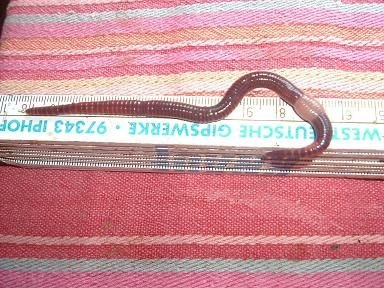
Earthworms are good for the soil
The Guinness book of records claimed that the largest worm ever recorded measured 6.7 meters / 22 feet when naturally extended and had a diameter of 2 cm / 0.8 inches and was apparently found in South Africa.
The smallest worms on the other hand can only be seen under a microscope.
The worms are very important for healthy and fertile ground. They dig continuously through the different layers of soil, swallow large amounts of dirt and decaying matter.
Their tunnels aerate the soil, allow roots of plants to grow to deeper mineral richer parts of soil and make it easier for water to penetrate the ground and feed the plants.
As they digest their food they enrich it with minerals and nutrients.
Their poop is called worm castings and is infinitely richer in nitrogen, phosphor, potassium, calcium and magnesium than the richest of top soil.
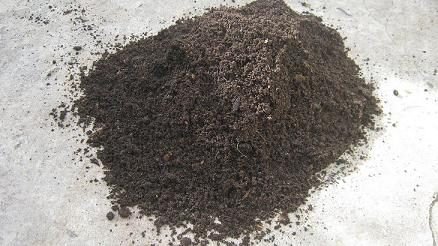
Follow this link to find out more about worm castings!
Although there are so many different kinds of worms active around the world there are actually only a handful of different species that can be used successfully to work as domesticated compost worms.
Eudrilius Eugeniae, Perionyx Excavatus, Eisenia Hortensis known as European Night crawlers and Eisenia Fetida know as Red worms or Red wigglers are the ones that are used and marketed by most Worm composting businesses.
Despite the fact that all these worm species are able to recycle large volumes of organic waste, it is the latter ones ie. “The European Night crawlers and the Red wigglers” that clearly dominate the world of worm composting!
Studies in the USA have shown that in some parts of the country worms can produce up to 875 kg of worm castings a day on an area of 10000 m2.
Making money with earthworms is easy
For more worm compost related information!
Type your question or keywords (for example “ compost worm”) into the search box below.
Worm composting against climate change
How do worms improve my garden?
More information about earthworms
For questions and suggestions, contact us through the Ask Stephan form.
Plan your first 90 days
Just starting out? My Easy Worm Farming Planner walks you through feeding, moisture and temperature week by week.