Compost worms: which worms to use
The best compost worm for most bins is the red wiggler (Eisenia fetida): hardy, hungry and a fast breeder. The European nightcrawler (Eisenia hortensis) and the red worm (Lumbricus rubellus) also work. Ordinary garden earthworms don’t.
Compost worms live in rich organic matter such as manure and compost heaps, and they happily eat kitchen scraps, garden waste and many kinds of animal waste. The basic rule: if it was once alive and is now dead, they’ll probably eat it.
Which worms are used for composting?
The most popular are:
- Red wiggler (Eisenia fetida), by far the most used in vermiculture
- European nightcrawler (Eisenia hortensis), a bigger worm that’s also popular as fishing bait
- Red worm (Lumbricus rubellus)
Garden earthworms and the big nightcrawlers that burrow deep in lawns won’t settle in a bin.
What does a red wiggler look like?
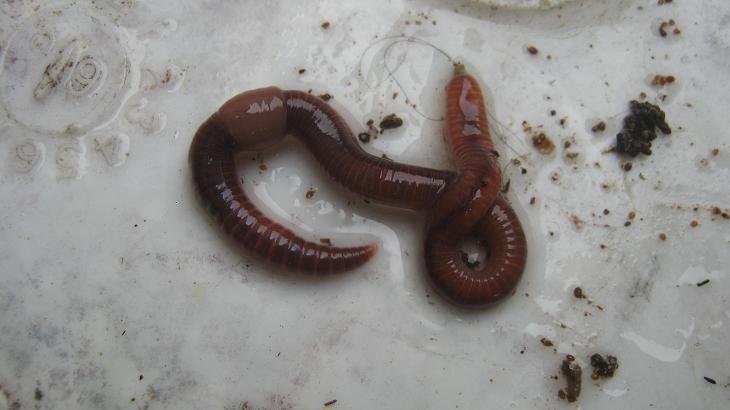
Eisenia fetida goes by many names, including tiger worm, red worm and red wiggler. It’s dark red, grows up to 20 cm long and 6 mm thick, eats about half its body weight a day in a bin, is hardy and, best of all, breeds fast.
How fast do compost worms multiply?
Under ideal conditions a worm population can double every 2–3 months. In theory, 1,000 mature worms could become more than 2 million within a year. That’s far more than you’ll ever need, even for a small business. A good start for a home bin is at least 500 worms.
What conditions do they need?
Moist bedding (as damp as a wrung-out sponge), shade, air and small regular meals (see feeding your worms). Compost worms cope with 5–29 °C (41–84.2 °F), ideally 15–25 °C (59–77 °F). Feed used coffee grounds sparingly, and see the worm food rating list for the rest.
Where can I get compost worms?
If you have a compost heap, look there first. With some patience you may find your starter batch for free, and red worms in compost are usually Eisenia fetida. Otherwise, worm breeders ship them quickly by post or courier. See where to buy composting worms.
What next?
Get the bin ready before the worms arrive: starting a worm farm and the homemade worm compost bin show you how. New worms sometimes ball up or wander in the first weeks; see worms balling up.
Happy worming!
Stephan Kloppert
Nearly 30 years of worm farming in South Africa and Germany
Running your worm farm as a business? How to Start a Profitable Worm Business on a Shoestring Budget shows you the way.