Different earthworm types
SHORT ANSWER
Only a handful of the 2,000 to 4,400 earthworm types suit a worm farm, so worms dug up in your garden usually won’t work.
See also: Compost worms: which worms to use
Are there different earthworm types that can be used in a worm farm? Can I use the worms I find in my backyard to start a worm bin?
These are 2 questions we hear regularly from people that are new to vermiculture and keen to start their first worm farm. Well there are several thousand different kinds of earthworms on our planet. The estimates range from 2000 to 4400 kinds but only a handful of them are ideal to recycle organic kitchen- and garden waste in specially prepared worm farms.
So we unfortunately can’t just take any worms that we find in our garden or backyard, throw them into a worm farm and hope to successfully recycle our wet waste.
So which worm should we use? Before I get to that I want to share briefly some information about the different earthworm types of our planet.
The earthworm types
Earthworms can be grouped into 3 main categories:
- Epigeic, Epigean – (above the soil surface)
- Endogeic (in the soil) and
- Anecic (deep vertical burrows)
The words “epigeic, endogeic and anecic have their roots in the Greek language and describe the kind of habitat the different earthworm types can be found in.
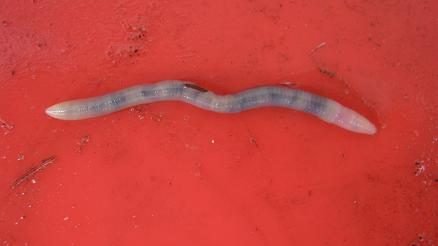
Anecic worms build permanent burrows with a width of up to 2 cm / 025⁄32inches and although they feed on organic matter they can’t be used in worm farms.
Their burrows can reach up to 3 m / 9ft 107⁄64inches into the ground. Anecic worms come usually only at night to the surface where they search for decaying material like leaves.
They pull their food down into their burrows and feed on it in the safety of their home.
The most famous worm from this family is the common earthworm as well known as dew worm, european nightcrawler or canadian nightcrawler (Lumbricus terrestris)
Anecic worms have pigmented skin. Their color ranges usually from brown to pale- and dark red.
The largest worms on earth are anecic and can grow up to several meters / yards long.
Endogeic worms live in the upper layers of the ground and feed on the organic matter in the top soil or on old tree stumps that are in the decomposing process.
They dig horizontal burrows when moving through the earth and come hardly ever to the surface.
Their skin is not pigmented and most of them have pale grey, pink and blue colors. Good examples of endogeic worms are amongst others the blue and grey “Octolasion cyaneum” and Allolobophora chlorotica.
Endogeic worms are range in size from 2 cm / 025⁄32inches to about 10cm / 4 inches.
Similar to their Anecic cousins the Endogeic worms should not be used in worm farms.
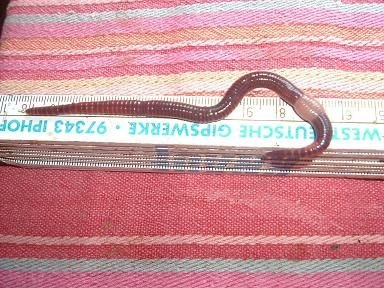
Epigeic worms live virtually above the soil in the top 10 to 20 cm / 4 to 8 inches of rich organic matter that is decomposing.
They feed on decaying leaves, fruit, cow dung and the waste of most other animals.
They do have a pigmented skin and are usually brown or red. The coloration serves them as a camouflage to protect them from their many natural enemies.
Like all earthworms they are sensitive to light and although they don’t have eyes can feel the sunlight on their skin and will swiftly dig for cover to avoid it.
Examples of epigeic worms are many kinds from the Dendrobaena genus, Lumbricus rubellus and Eisenia fetida as well known as Eisenia foetida.
These worms are very active and are for this reason as well used by many freshwater fishermen as bait to catch their favorite fish.
Off all the earthworm types the epigeic worms are the only ones that can be used commercially in vermicomposting systems.
Several worms of the epigeic kind are used in domestic and commercial worm farms. Lumbricus rubellus for example is one of them.
The probably ideal worm for vermiculture is the compost worm Eisenia fetida.
It can be held in captivity, feeds heavily on rich organic matter like kitchen scraps, garden waste or compost and multiplies rapidly.
They can eat half their body weight per day. Just 8000 of those amazing little wigglers can eat a kilogram / 2 pounds and 3 ounces per day. Compost worms originated in Europe but can now be found all over the world on all continents except Antarctica.
Although the epigeic worms are usually just in the decomposing materials above the ground they can occasionally be found in elevated places like house walls, on trees and in filters of koi ponds.
As long as their basic living conditions are met they will stay there quite comfortably.
Learn more about compost worms.
Worm tea an amazing organic fertilizer.
Learn more about different kinds of earthworms

Plan your first 90 days
Just starting out? My Easy Worm Farming Planner walks you through feeding, moisture and temperature week by week.