Worms convert dog poop into plant food
Yes, compost worms will happily eat dog poop. Set up a separate worm bin just for the poop, add at least 500 to 1000 compost worms, scoop with gloves or a bag, and use the castings on flowers, trees and lawns only, not on fruit and vegetables.
Dealing with dog poop is probably one of the things every dog owner dreads! There are indeed millions of nicer topics to talk about than dog waste.
But let’s face it: every proud owner of a German Shepherd, Jack Russell, Husky or any other breed will have to make a plan to get rid of his or her best friend’s waste. Dog feces can be annoying, smelly and even the cause of disease. There are a lot of bacteria in dog waste, including E. coli and salmonella.
Using worm composting to get rid of dog poop
Probably the most common way to deal with dog waste is to send the children into the garden or backyard on a regular basis to scoop up the smelly piles and throw them into the rubbish bin.
This way we get rid of the problem in our backyard, but the animal waste is still dumped on the municipal landfill sites and poses a threat to communal health.
A much better way to deal with dog waste is to use composting worms to convert it into nutrient-rich worm castings. Dog poop is an excellent food source for compost worms. Worms don’t have teeth and can only feed on soft, decomposing materials.
We have a worm bin, or as I call it a “pet poop composter”, in the backyard that has been running exclusively on dog poop for close to 15 years now. The worms seem to be happy and their breeding activity in those worm bins is exceptional.
How to set up a dog poop worm bin, step by step
1Get a worm bin just for the dog poop
To get started you first have to buy or build a worm bin. A simple homemade bin works well.
Keep it separate from the worm bin you use for kitchen scraps, because the castings from a dog poop bin are not meant for food plants (see step 5).
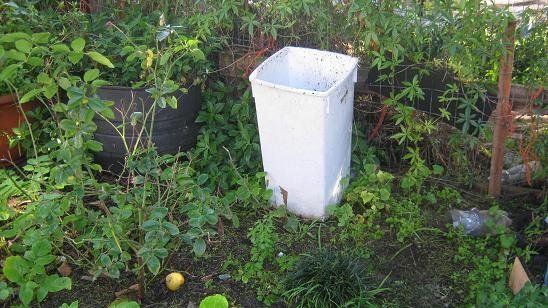
A simple homemade worm bin 2Add the right worms
Then get hold of some compost worms for breeding stock. The most popular worms are Eisenia fetida, commonly known as compost worms, red worms or red wigglers. If you can’t get them, use European nightcrawlers. They will work well too.
Depending on the size of your dogs, add at least 500 to 1000 worms. The bigger your worm bin, the more worms you can add. Worms tend to grow bigger if they don’t feel crowded.
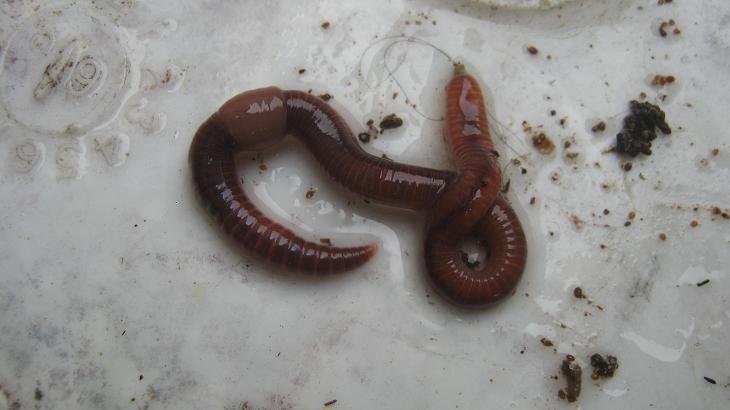
Eisenia fetida is an excellent compost worm 3Scoop up the poop safely
We have worked with dog waste for many years and never had any health issues, but it is good practice to wear rubber gloves or use a plastic bag when scooping up the dog feces.
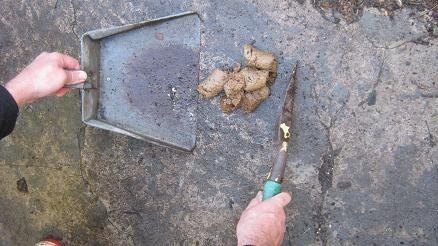
To recycle dog waste, scoop it up 4Add it to the worm bin
Add the dog poop to the bin and let the worms do the work. A healthy worm bin never smells, so there are no bad odours in the backyard or garden.
Happy worms breed well: in our dog poop bins we often find dozens of worm cocoons in a tiny space.
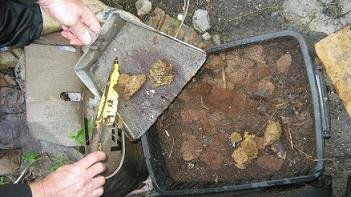
Dog poop added to the worm bin 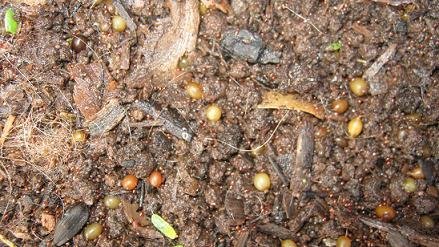
More than 20 worm cocoons in a tiny space 5Use the castings on ornamentals only
The worm castings can be used to fertilize flowers, trees and lawns, but should not be used to feed fruit and vegetables.
I once planted a sunflower seed in one of my dog poop worm bins. It germinated soon after, and when it was about 5 cm / 2 inches high I moved it into a bucket filled with worm castings, where it grew into a big sunflower.
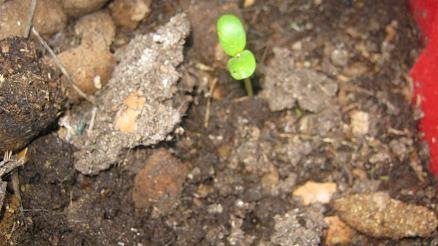
A sunflower seedling in the dog poop worm bin 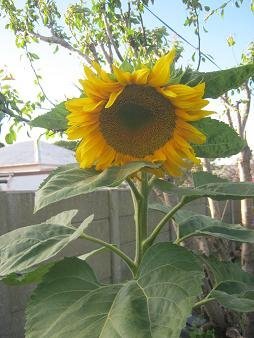
The sunflower in bloom
Benefits of recycling dog poop with worms
- No bad odours in the backyard or garden (healthy worm bins never smell)
- Less waste rotting on landfill sites
- A constant supply of worms that will recycle organic waste
- A constant supply of fat worms for freshwater fishing
- Extra worms you could sell for a little extra income
- Worm castings to fertilize flowers, trees and lawns (not fruit and vegetables)
Flies in the dog poop bin? Bury the poop under bedding and keep the surface covered. See how to keep black soldier flies out of a dog poop worm bin and Help, there are maggots in my worm bin!
Keeping a log of what goes into the bin and when helps you see how much poop your worms can handle. The Easy Worm Farming Planner has printable tracking pages for that.